So the time came to sell my beloved 76 series Landcruiser wagon. There will be four-wheel drive connoisseurs out there who will think I am mad to have done what I am about to tell you… I never planned to sell, It was one of the most coveted model four-wheel drives ever made. An accidental masterpiece.
Toyota engineers short on options threw the V8 turbo diesel from the 200 series in with a manual transmission. Complete with it’s live axels and locking differentials it was a formidable beast. I’d planned to be buried in mine.
But late 2024 year I was diagnosed with a second chronic illness that meant I needed to rethink my lifestyle. It wasn’t the raised cabin height or the modified clutch that was bothering me, although they did from time to time, all standard modifications I made to improve the vehicles capability. Rather the overall effort to live day-to-day such a demanding vehicle. All things I loved about the car originally, the pure theatre of it, were now becoming annoying.
Although not massively fast due to its aerodynamically challenged shape and prehistoric gear-ratio-salad transmission, it was still always an event to operate.
The glorious sound of the V8 engine with it’s minimal sound proofing and an unhindered full length 3-inch exhaust. The mighty 1VDFTV V8 engines were only available in some countries and Australia was one. As it turned out Toyota pulled the plug on the V8 engine, and the already high resale prices skyrocketed. Although I was aware resale prices were high, I also didn’t really know what I would replace it with. I had thought of getting one of the newer 76 wagons with improved power and fuel efficiency from a 4 cylinder and automatic transmission. As it turns out the choice was made for me. Toyota had shut down the production line for 70 series Landcruisers and I wasn’t going to be able to get one for 18 months or more. So, with that in mind, I test drove a Landcruiser Prado (250 series) and ended up on a waiting list for floor stock or cancelled orders with the local Toyota dealer. That ended up a fruitless exercise. They fucked me around and even took a deposit on a car and later sold it to someone else presumably who offered them more. In the end I purchased an unaccounted-for 300 Series GX that was destined for floor stock at a Toyota dealer an hours’ drive west.
Normally, as a rule, anything over $1000, I will perform a basic requirements analysis. This is only the second time in 20 years I did not do that, and the time before was ironically when I purchased a Toyota Hilux. The pressure caused by the 76 series selling within hours of its advertisement and the local Toyota dealers customer experience.
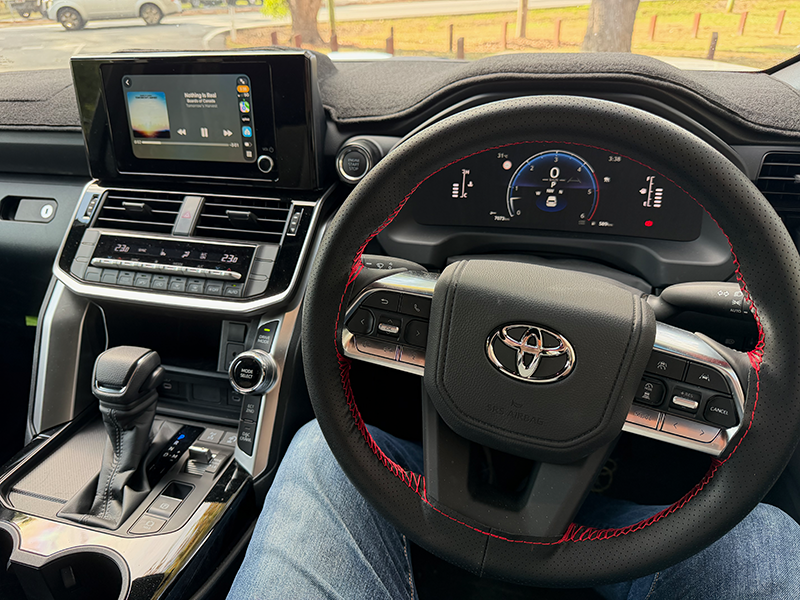
This aint your Grandpappy’s Landcruiser
The contrast between the new and the old Landcruiser could not be greater. 11 years between specific manufacture dates and 37 years between the official model releases.
The 300 series had been part of a successful strategy to get more north American sales. Toyota for many decades dragged its feet, preferring to stick with conservative engineering to minimise risk and bolster reliability. But the north American market demanded greater refinement, especially in the drive train and cabin design and fitment. Add the additional layer of compliance with various international bureaucratic safety and emission standards and you end up with something that far removed from a design that met end users needs.
Then there was there was the price, well north of $100,000 AUD for even the most basic specification (what we purchased).
I could discount all the usual bitching and moaning on social media about the abandonment of the V8 power plant, the questionable build quality, the Toyota Safety Sense driver’s aids. But every new model that comes out, staunchly conservative Landcruiser owners find something to object to. Yet most owners of new models believe there are improvements. The new 300 is certainly faster and more refined, it’s much more suited to the daily tasks most Landcruiser’s actually do, rather than aspire to. The performance should be a bigger deal in light of the vehicles fuel consumption. Although not great, I suspect the 300 series is approaching what is ultimately achievable with a 2.4 ton SUV. I only found out afterwards that many of the panels are aluminium to save weight and lower the centre of gravity.
Mrs. Doubtfire
So yes, there is a lot of ‘nanny’ technology in the new Toyotas, and that’s proven to be unpopular with many people. I confess I must fight internally with myself not to let them get to me. They are, for an extremely intrusive feature not in anyway customer focussed. They make the driving experience less pleasant, and I believe, potentially more dangerous.
The trick is to understand how to quickly navigate the useability challenged system to disable the safety features you are allowed to. Then simply grin and bear the relentless nagging the system will bombard you with. It’s better than having your Toyota steer you into the oncoming semi-trailer while trying to avoid the plastic bag blowing across the road.
Nobody is perfect And to the same degree; Toyota are not perfect. In all, the 300 is comfortable and the best of a bad bunch. Capped pricing on services and apparent residual value make them a conservative decision. It’s best to purchase your first Landcruiser with a salary sacrifice car allowance. Then the ‘Toyota tax’ is working for you, not against.